For many people moving to Boca Raton, Delray Beach, or Boynton Beach, food is one of the first daily-life questions to solve. Where can you buy groceries you trust? Is there a market with prepared food when a week gets busy? Which restaurants are convenient for lunch with friends, a family visit, or an easy takeout night? Those practical answers can make a new community feel familiar much sooner.
Kosher food in Boca Raton, Delray Beach and Boynton Beach includes dining, shopping, bakery, and prepared-food choices. The right fit depends on your own standards, the kind of food you enjoy, how often you expect to cook, and where you will live. A restaurant that is perfect for a special dinner may not be the best choice for a quick weekday meal. A market with a strong bakery and prepared-food counter may matter more than a restaurant that is closer on a map.
It is also worth being specific about what “kosher nearby” means to you. Some households are primarily looking for a full grocery trip, while others need a reliable meat restaurant, dairy option, takeout, catering, or prepared food before Shabbat. Ask the questions that apply to your household rather than assuming every listing carries the same products or follows the same supervision. That approach keeps a food search practical and respectful of the standards you keep.
Certified kosher and kosher-style are not the same. This guide identifies certified options only when the business or a recognized certifier publishes that status. It does not treat a kosher-style menu as certified kosher. Menus, supervision, hours, holiday schedules, delivery areas, and product availability can change, so always confirm the current details directly with the establishment and certifying agency before making plans around it.
1. Start with your everyday food routine
Before comparing homes, write down how you actually eat during a normal week. Do you cook most meals, depend on prepared food occasionally, enjoy sit-down restaurants, need an easy lunch stop, or host family often? Do you need particular products, a bakery, wine, a butcher counter, catering, or food for Shabbat and holidays? The answer will tell you whether market access, restaurant access, or both deserve a higher place on your list.
There is a useful difference between having a kosher option nearby and having a food routine that is easy to maintain. A longer drive may be perfectly reasonable if you shop once a week and enjoy cooking. It may be less appealing if you expect to make several short trips or need prepared food regularly. Consider traffic, parking, gate access, and whether the route still feels comfortable after dark or on a busy Friday afternoon.
Use a real visit to test the routine. Combine a community tour with a market stop and one restaurant meal. Paul’s touring checklist can help you capture the practical details, while the community comparison worksheet gives you a place to compare the daily errands that matter after you move.
Think about the small contingencies as well. If you do not feel like cooking, can you order ahead or pick up dinner without adding a difficult trip? If friends visit, is there a comfortable place to meet? If you are not in town year-round, would you know where to buy the items you rely on during the first few days back? A strong answer to those questions is a good sign that a location supports real life, not just a weekend tour.
2. Boca Raton: certified dining and market options
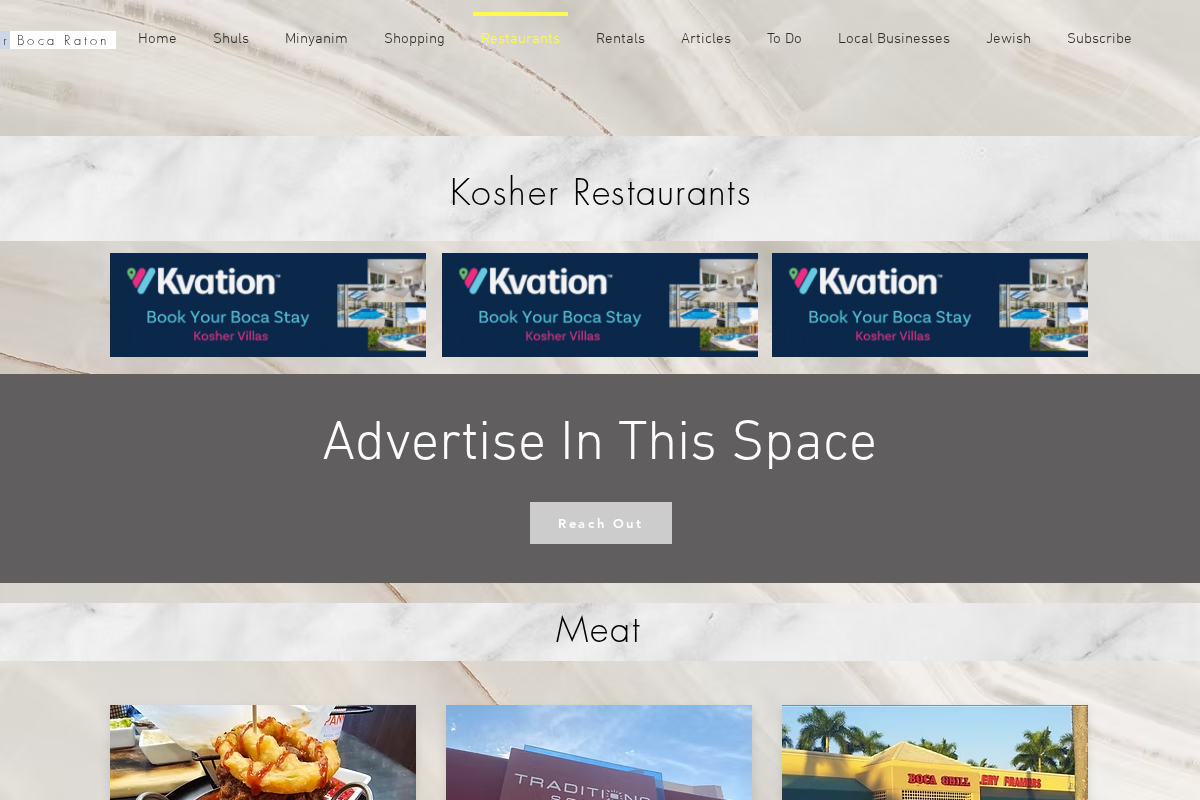
The Kosher Boca Raton restaurant directory is a useful first stop because it groups local options by type and provides current listing information. It is more useful than relying on a general restaurant app when you are new to the area, but it should still be followed by a visit to the restaurant’s own site or a phone call for current supervision, hours, reservations, and holiday policies.
For example, Kosher Chobee Boca Raton describes a chef-driven menu, a Boca Raton location on Powerline Road, and ORB certification. Shawarma Bar & Grill House publishes its Middle Eastern menu, Boca Raton location, ORB certification, and current posted hours. These are useful examples of how individual restaurant sites can answer the questions that directories cannot.
As you compare dining options, look beyond the cuisine. Ask whether the restaurant takes reservations, whether ordering ahead is available, and what time the kitchen closes. If mobility, hearing, or a quieter setting matter to you, call before going and ask what arrival will be like. A five-minute call can prevent a frustrating outing and will tell you a great deal about whether an establishment feels comfortable for repeat visits.
Do not choose a 55+ community solely because it has a restaurant you like nearby. Instead, ask whether the area supports the full week: groceries, services, social plans, family visits, medical appointments, and the places you expect to return to often. The nearby synagogue guide can help you compare food and community access together.
Boca Raton market, bakery, and prepared-food planning
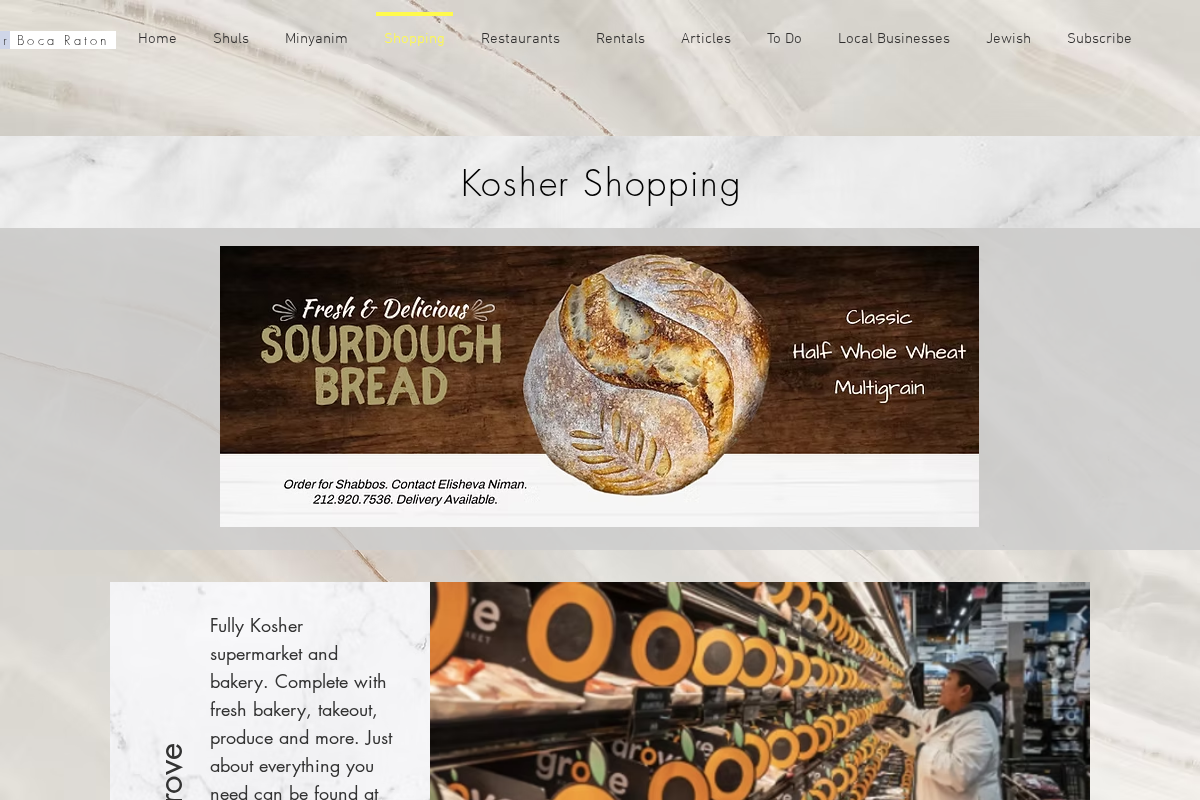
A good market can make a move feel easier from the first week. The Kosher Boca Raton shopping directory lists local shopping resources, including fully kosher markets and bakery options. Its listings can be a helpful starting point for understanding the difference between a large grocery trip, a prepared-food stop, and a quick pickup for a weeknight meal.
Aroma Market says its Boca Raton location carries Glatt Kosher meats, poultry, fish, pantry goods, dairy, frozen foods, produce, deli items, snacks, and more. The directory also describes The Grove as a fully kosher supermarket and bakery with fresh bakery, takeout, and produce. Check each business directly for current product availability, delivery or pickup options, and holiday hours before relying on a particular item or service.
When you visit a market, notice the part that is easy to overlook on a website: the trip itself. Is parking straightforward? Can you manage the bags easily? Is there a route that makes sense from the community you are considering? A market that fits naturally into your errands can be more valuable than a slightly closer one that makes every shopping trip feel difficult.
A first market visit is also a good time to make a short, realistic shopping list. Include the staples you would need for a normal dinner, a few items for breakfast, something for a guest, and any products that are important to your household. You will quickly learn whether the market works as an occasional specialty stop or as a dependable part of the week. That distinction matters when you are deciding between neighborhoods.
3. Delray Beach: a certified dining option
Delray Beach can be a strong fit for people who want to keep a food routine connected to a western Delray community or to the Boca border. As with Boca Raton, the real question is not whether a restaurant appears nearby online. It is whether the route, schedule, and atmosphere work with your ordinary week.
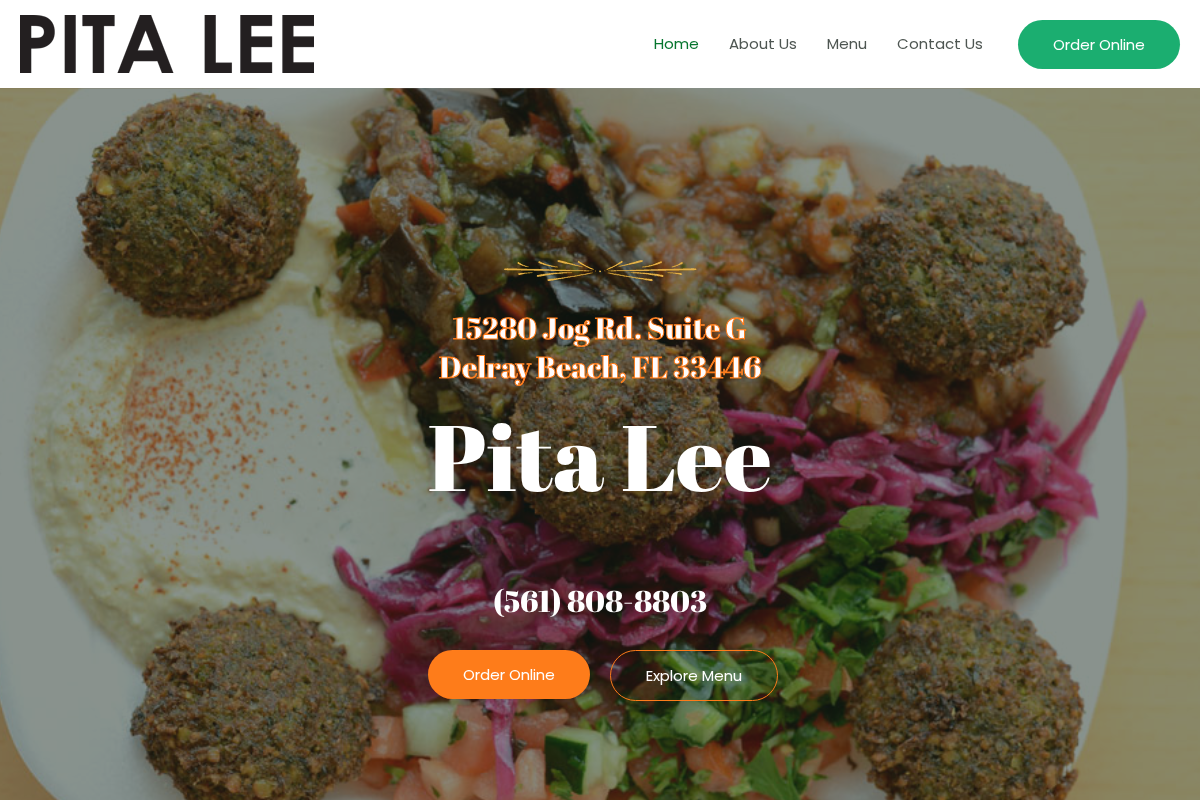
Pita Lee is located on Jog Road in Delray Beach and publishes its menu, address, ORB certification, and ordering information. Its site describes a mix of Mediterranean dishes and both quick-service lunch and table-service dinner. That is useful for someone looking for an option that can work differently on a weekday lunch than on a relaxed evening out.
If you are comparing Boca Raton, Delray Beach, and Boynton Beach communities, make the visit part of the decision. Drive from the exact community you are considering, then see what else is nearby. A restaurant choice is more useful when it sits inside a comfortable routine rather than becoming a special trip every time you want to use it.
Give yourself permission to notice preferences that are harder to measure. Some people enjoy a lively room and a full evening out. Others want a calm table, easy parking, and a dependable place where they can meet a friend without much planning. Neither preference is more important. The best location is the one that gives you convenient choices that feel natural for the way you actually live.
4. Boynton Beach: certified restaurants, market, bakery, and prepared food
The Orthodox Rabbinical Board of Broward and Palm Beach Counties directory lists several certified Boynton Beach options. For full grocery shopping, Kosher Central KC Market at 3775 West Woolbright Road is listed by ORB as a certified market. The same location is listed for prepared food and specialty counters, including Mizrachi’s Pizza Kitchen, Falafelim, Sushi Nation, Florida Kosher Fish, and Shlomi’s Hummus in the bakery category. Confirm the current counter, menu, and supervision for the specific item you want before going.
For certified meat dining, ORB lists Bissli Grill at 12355 Hagen Ranch Road and The W Kosher Steakhouse at 12250 Westchester Club Drive. ORB also lists Mizrachi’s Pizza Kitchen at KC Market as a certified dairy restaurant. Mizrachi’s publishes that its Boynton Beach location is ORB certified and offers catering, which can be useful when prepared food or a larger order is part of your planning.
This is a practical Boynton Beach hub for someone who wants a market, restaurant, bakery, and prepared-food options in the same general area. It does not mean that every food business nearby is certified kosher. Check the current certifier listing or contact the business directly, especially before Shabbat, a holiday, or a catering order.
5. Plan ahead for Shabbat, holidays, and visiting family
Food planning changes during Shabbat and holidays. Restaurant and market hours may shift, prepared food may require advance ordering, and popular items may sell out before a busy weekend. If these periods are important to your household, ask about ordering cutoffs, holiday schedules, delivery areas, pickup timing, and any current guest or catering policies before you need them.
Build a simple backup plan too. Keep the name and hours of more than one market or restaurant that suits your needs, especially if you are new to the area or arriving for a seasonal stay. A backup is not about expecting a problem. It simply makes the first few weeks less stressful if traffic, an early closing, a holiday schedule, or a full prepared-food counter changes your original plan.
It also helps to think about visitors. Adult children, grandchildren, and out-of-town friends may make restaurant access, a bakery, easy takeout, or a larger table more meaningful than it seems during a quick home tour. Consider how you would handle a normal weekend with family, not just a quiet weekday. That is a better test of whether a community and location will feel flexible over time.
The wider Boca, Delray, and Boynton relocation guide can help you place food planning alongside community resources, social life, and the other practical choices behind a move.
6. Choose a home that supports the routine, not just the listing
A food guide is not a reason to rush into a home, but it is a useful way to test whether an area works for you. The most successful move is usually the one that supports ordinary life without a lot of friction. That may mean an easy drive to a market, a restaurant your friends enjoy, nearby family, a congregation, medical care, and a home that is comfortable to maintain.
When you have a short list of communities, revisit the essentials from each one. Compare the drive, parking, road comfort, association rules, monthly costs, and the activities that will fill your week. The 55+ community guide can help you frame those housing questions before you decide.
If one community looks best on paper but makes your regular errands feel complicated, pause before you commit. A short second visit that includes the market, a meal, and the drive home can be more revealing than another hour comparing listing photos. The goal is not to find a perfect location. It is to choose a home where the routines that matter feel easy enough to enjoy.
How Paul helps you compare the practical side of a move
Paul helps clients compare Boca Raton, Delray Beach, and Boynton Beach 55+ communities based on the routines that matter after closing. That includes the drive to food shopping, restaurants, family, places of worship, health care, and the activities that help a new home feel connected. He does not recommend a restaurant or certify an establishment, but he can help you make sure the area around a home supports the life you want to live.
Use the contact page to share the routines and locations that matter most before you schedule a tour. A clear list of priorities makes it easier to focus on communities that genuinely fit.
Frequently asked questions
Where can I find kosher restaurants in Boca Raton?
The Kosher Boca Raton restaurant directory is a practical starting point for current local options. Once you identify a restaurant, visit its own website or call directly to confirm current supervision, hours, reservations, menu availability, and holiday policies. These details can change, so direct confirmation is the best way to plan a visit.
Are there kosher markets in Boca Raton?
Yes. The local Kosher Boca Raton shopping directory lists fully kosher market and bakery options, and Aroma Market publishes information about its Boca Raton market. Check each market directly for the products, prepared food, pickup, delivery, and holiday schedule that matter to your household.
Is there a kosher restaurant in Delray Beach?
Pita Lee is one Delray Beach option with a public menu, address, ordering details, and ORB certification information on its website. Before going, confirm the current hours, supervision, menu, and availability directly with the restaurant, especially before Shabbat or a holiday.
Where can I find certified kosher food in Boynton Beach?
The ORB directory lists Kosher Central KC Market, Bissli Grill, The W Kosher Steakhouse, Mizrachi’s Pizza Kitchen, Falafelim, and other certified counters at or near the KC Market location in Boynton Beach. Check the current ORB listing and contact the business directly for hours, menu, supervision, and availability before going.
Should kosher food access affect my 55+ community choice?
It should be one of the daily-life factors you compare alongside the home, association, monthly costs, family access, health care, and social routine. Visit the route from the exact community you are considering. A market or restaurant that looks close online may feel different depending on traffic, parking, and how often you expect to use it.
These resources are provided for general relocation information. Paul provides equal professional service and helps clients evaluate homes using the location, property, and lifestyle criteria they identify.
Housing services are provided without regard to race, color, religion, sex, disability, familial status, national origin, or any other characteristic protected by applicable law. Community and religious resources are provided for general informational purposes only and are not recommendations regarding where any person should live.
Written and reviewed by Paul Saperstein, Broker Associate, SRES® | eXp Realty LLC: Last reviewed August 2026.